
Report on our meeting of Tuesday 24th July 2018
Congratulations to Pat for his win of the New World Tawa raffle.
We heard from club speaker, Peter Lockery, on his bucket list to attend the major world tennis tournaments and a recent trip to the French open at Paris, followed by a 12 day Mediterranean cruise.
We also welcomed two visitors as potential new members; Virginia Wilson and Louise Bray-Burns.
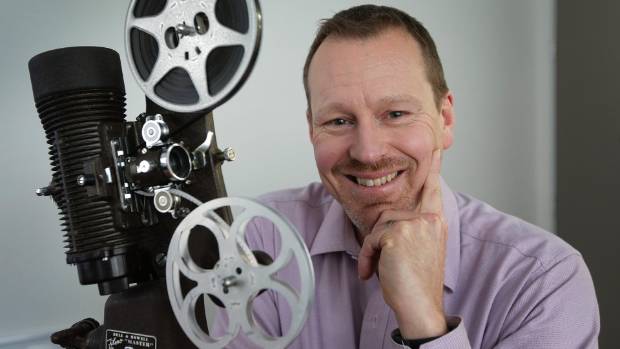
Our main speaker was David Shanks, Chief Censor, who spoke to us on the work of the Censor and future direction.
David has been Chief Censor since May 2017. His career has spanned senior leadership and legal positions in both the public and private sectors.
David commenced his presentation with a quick review of the history of censorship and that it actually had Roman origins which provided its derivation connection to census. Officially known as the "Office of Film and Literature Classification", the office acts to preserve New Zealander's rights to freedom of expression in its decision making. The office provides recognised classifications, reliable warnings, and valued guidance to the public every day. They work with enforcement agencies on the darker side to help reduce the impact of publications that promote such things as child exploitation, terrorism, and sexual violence. They also provide globally recognised research; e.g. a recent publication is a research paper on "Young New Zealanders Viewing Sexual Violence" which deals with interviews with young New Zealanders.
The current legislation originates from the 1993 Films, Videos, and Publications Classification Act, so that it is pre internet technologies. Their scope includes anything at all that may have writing or images on it, including; jigsaw puzzles, clothing, bumper stickers, photos, drink cans, and campervans. Their involvement may be proactive; e.g. for films, DVDs, and video games, or reactive, e.g. in response to a complaint. The prime criteria for censorship is whether its availability is likely to be injurious to the public good.
The online world of the internet and social media present new challengers and potentially new solutions.
"Watch carefully - think critically"
David left us with some copies of brochures about "New Zealand's Classification System", "Challenging Media: talking to young people about what they're watching", and the research paper "Young New Zealanders Viewing Sexual Violence"
David is a Barrister and Solicitor of the High Court of New Zealand, holding Bachelor of Arts (in philosophy) and Bachelor of Laws degrees from Otago University and a Master of Laws degree from Victoria University.
From a career start in private practice litigation in Palmerston North, and following a stint of commercial legal work in London, David progressed on to varied legal and public service management career. He has run some of the largest public legal teams in the country, and conducted national inquiries as Chief Legal Advisor for the State Services Commission. He then progressed on to general management positions, including carrying out Deputy Chief Executive Responsibilities at the Ministry of Social Development, more recently returning to the private sector as Director of a Wellington based tech company, developing legal software.
He sees his current role as the perfect opportunity to bring together his interests in regulation, public policy and technology.
David is a proud husband and father of three (just embarking on the challenging teenage years). His interests range from brewing beer and modifying motorcycles, to hunting and collecting vintage audio gear. He likes the occasional adventure, and has rafted both the Zambesi and the Nile.